West Africa stands as the undisputed heartland of global cocoa production, supplying approximately 70% of the world’s cocoa beans. This extraordinary concentration of production in a single region makes its agricultural stability critically important for the entire global chocolate industry. Key producers within this belt include Côte d’Ivoire, which alone accounts for about 39% of global output, and Ghana, contributing another 21%. Other significant players are Nigeria, the world’s fourth-largest producer, and Cameroon, ranking fifth globally. Collectively, these nations produce over 60% of the world’s annual cocoa requirements.
The economic reliance on cocoa in these countries is profound. In Côte d’Ivoire, cocoa exports fuel the agricultural sector, employing two-thirds of the population and accounting for a substantial 60% of export receipts. Ghana’s economy also heavily depends on cocoa, which contributed over 10% to its Gross Domestic Product (GDP) in 2021 and 25% of its total merchandise export earnings. For Nigeria, cocoa remains the leading agricultural export, despite a decline in its global share following investments in the oil sector. This deep economic entanglement means that any significant disruption to cocoa production in West Africa has far-reaching consequences, extending beyond regional borders to impact global supply chains and consumer markets. The recent surge in cocoa prices, which saw a 136% increase between July 2022 and February 2024, with a record high of $12,605 per ton in December 2024, serves as a stark illustration of this global supply chain vulnerability, directly linked to climate extremes in West Africa’s cocoa belt.
However, this vital crop is inherently delicate. Cocoa is a sensitive plant that thrives under very specific conditions: high rainfall, typically between 1,500 and 2,000 millimeters annually with dry spells lasting no longer than three months, and warm temperatures, ideally up to 32°C (90°F). It also requires the shade and protection offered by rainforest trees. Consequently, cocoa cultivation is restricted to a narrow band of countries located between 20 degrees north and south of the equator.
West Africa’s climate has already warmed more than the global average, with surface temperatures increasing by 1–3°C since the mid-1970s. Heatwaves have become hotter and longer, and extreme rainfall events have intensified. These changing weather patterns are directly disrupting cacao crops, affecting both the quantity and quality of beans, and driving up global cocoa prices. This report aims to comprehensively analyze how climate change is impacting cocoa production in West Africa, the profound socio-economic consequences for millions of smallholder farmers, and the multi-faceted strategies being developed and implemented to build resilience and ensure a sustainable future for this critical global commodity.
I. West Africa’s Cocoa Heartland: A Foundation Under Threat
A. Economic Pillars: Cocoa’s Indispensable Role in National Economies
Cocoa is not merely an agricultural product in West Africa; it is a cornerstone of national economies, providing livelihoods for millions and generating significant foreign exchange. The region’s dominance in global cocoa supply underscores its economic importance.
Côte d’Ivoire, as the world’s largest producer and exporter, accounts for approximately 40% of global production. Between 2019 and 2022, the country consistently produced between 2.10 and 2.15 million tonnes of cocoa beans annually, reaching a peak of 2.25 million tonnes in 2021. This sector is the lifeblood of its agricultural economy, employing two-thirds of the population and generating 60% of export receipts. The value of these exports peaked at $5.06 billion in 2021.
Ghana holds the position of the second-largest cocoa producer and exporter globally. Cocoa is widely described as the “mainstay” of Ghana’s economy, contributing about GHS3.1 billion ($533 Million) to the country’s GDP in 2021, representing over 10% of its total GDP, and accounting for 25% of its total merchandise export earnings. The cocoa subsector alone provides direct employment for over one million farmers and indirectly supports millions more in related industries. Ghana achieved its highest-ever cocoa production of 1,047,000 metric tons in the 2020/2021 crop year.
Nigeria, currently the world’s fourth-largest producer and third-largest exporter, historically held the position of the second-largest producer in 1970. While its share of world output declined following investments in the oil sector during the 1970s and 1980s, cocoa remains the country’s leading agricultural export. Annual production typically hovers between 200,000 and 300,000 metric tonnes. A significant portion, over 70%, of Nigeria’s cocoa exports are destined for Europe.
Cameroon, ranking fifth globally, contributes approximately 300,000 tonnes to global cocoa production. Like its West African counterparts, agriculture, including cocoa, remains a fundamental pillar of its economy.
The data presented in Table 1 further illustrates the profound economic reliance of these nations on cocoa.
Table 1: Key Cocoa Producing Countries in West Africa: Production & Economic Reliance
| Country | Global Production Share (%) | Annual Production (tonnes) (Recent Peak/Average) | Economic Contribution (% of GDP / % of Export Earnings) | Number of Farmers/Livelihoods Supported (Millions) |
| Côte d’Ivoire | ~40% | 2.25M (2021 peak) | 15.5% GDP (2023), 60% Export Receipts | 1M farmers |
| Ghana | ~21% | 1.047M (2020/21 peak) | >10% GDP (2021), 25% Export Earnings | 1M+ farmers, 3.2M workers |
| Nigeria | ~6% | 200,000-300,000 (annual) | 0.3% Ag. GDP (2010), Leading Ag. Export | N/A (supports farm families) |
| Cameroon | N/A (ranked 5th) | 300,000 | Mainstay of economy | N/A |
B. The Smallholder Backbone: Millions Dependent on Cocoa for Livelihoods
The global chocolate industry, valued at approximately $100 billion annually, rests predominantly on the shoulders of smallholder farmers. An estimated 5 to 6 million farmers worldwide cultivate cocoa along the equatorial belt, with the vast majority residing in West Africa. A striking 90% of the world’s cocoa beans are harvested on small, family-run farms, often with less than two hectares of land. This agricultural model means that the livelihoods of millions are directly tied to the success and stability of cocoa cultivation. In Ghana, for example, cocoa farming provides direct employment for about 800,000 farm families and indirectly supports millions more in related industries. Similarly, Côte d’Ivoire’s cocoa sector supports one million farmers. This extensive network of small-scale producers forms the essential backbone of the global cocoa supply.
C. Inherent Vulnerabilities: Delicate Crop, Traditional Practices, and Systemic Issues
Despite its global dominance and economic significance, the West African cocoa sector is plagued by deep-seated vulnerabilities that render it inherently unstable. This situation presents a striking paradox: the world relies heavily on a system that, for the very people who produce the commodity, is precarious and unsustainable. The juxtaposition of West Africa’s overwhelming share of global cocoa production with its internal fragilities means that these challenges are not merely localized agricultural concerns but systemic risks for the entire global supply chain. Addressing these vulnerabilities is therefore crucial for global market stability, not solely for regional development.
One primary concern is the pervasive low productivity and the prevalence of aging farms. Average yields on smallholder farms are notably low, typically ranging from 600-800 kg per year. Many farms suffer from aging cocoa trees, which yield less, and the continued use of poor farming practices. This combination leads to declining overall yields , with as much as 40% of Ghana’s total cocoa tree stock being technically redundant due to age or disease.
Pests and diseases pose another significant threat. The Cocoa Swollen Shoot Virus Disease (CSSVD) affects approximately 17% of Ghana’s total cocoa tree stock and over 200,000 hectares of farms. Black pod disease also causes plants to rot, particularly during periods of heavy rainfall. These issues are further compounded by changing climatic conditions, which can exacerbate their spread.
Economic instability is a constant burden for farmers. Cocoa prices are notoriously volatile, heavily influenced by global market trends and speculative trading, leading to significant fluctuations in farmer incomes. Despite the global cocoa sector’s $100 billion market worth, only about $6 billion accrues to the 5 million growers in West Africa. This severe economic inequity means many farmers earn less than $1 a day, with some female farmers reportedly earning as little as 30 cents a day. This profound poverty is recognized as a grave problem.
This economic fragility is deeply intertwined with other critical issues, forming interconnected vicious cycles of poverty, deforestation, and low productivity. Farmers, trapped in a cycle of meagre livelihoods, often lack the ability or incentives to invest in and improve their existing plantations. They struggle to afford necessary agricultural inputs like fertilizers and pesticides. This underinvestment perpetuates poor farming practices, contributes to low productivity, and ultimately results in declining yields. To compensate for these declining yields and to meet the rising global demand for cocoa, farmers are frequently driven to clear new forest land for expansion. This direct link between poverty and deforestation is well-established, with poverty being a leading cause of forest loss. The loss of forests, in turn, is associated with increased local temperatures and reduced rainfall , exacerbating the very climate conditions that stress cocoa trees and further reduce yields. This creates a self-reinforcing negative feedback loop, pushing farmers into deeper poverty. Furthermore, the prevalence of child labor in the sector is a direct consequence of the low prices paid to cocoa farmers, forcing them to rely on their children for survival. Over 2.2 million children are estimated to be involved in cocoa plantations across West Africa. This complex interplay means that solutions must be holistic; simply addressing deforestation without simultaneously tackling farmer poverty or low productivity is unlikely to succeed, as farmers will continue to seek new land to survive. Fairer prices and investment in sustainable practices are not just ethical imperatives but economic necessities for breaking these destructive cycles.
II. The Climate Crisis Unfolding: Direct Impacts on Cocoa Production
The delicate balance required for cocoa cultivation is increasingly disrupted by the intensifying effects of climate change in West Africa. The region is experiencing a dual threat of climate extremes, characterized by swings between too much and too little of what the cocoa plant needs, alongside a destructive feedback loop between deforestation and climate change.
A. Rising Temperatures and Extreme Heat: Pushing Cocoa Beyond Optimal Growth
West Africa’s average annual surface temperatures have increased by 1–3°C since the mid-1970s, a warming trend that has outpaced the global average increase of 1.09°C since pre-industrial times. There is high confidence that temperatures will continue to rise, with some areas projected to see increases of up to 5.5°C in the far future.
Cocoa trees thrive in warm conditions, with an optimal growth range up to 32°C (89.6°F). Temperatures exceeding this threshold significantly reduce the quality and quantity of harvests. Over the past decade (2015-2024), human-caused climate change has added a substantial number of days with temperatures above 32°C. Côte d’Ivoire and Ghana, which together account for over half of global cocoa production, experienced nearly 40 additional days per year above this threshold. Cameroon and Nigeria also saw increases, with an average of 18 and 14 additional days per year of cacao-limiting heat, respectively. In 2024 alone, 71% of cacao-producing areas across these four countries experienced at least six additional weeks of growth-limiting heat.
Excessive heat severely impacts cocoa production by hindering photosynthesis and increasing water stress within the plants, leading to shriveled flowers and smaller, rotting pods. Farmers in Côte d’Ivoire have reported instances where excessive heat caused leaves, which typically provide crucial shade, to fall off the trees, exposing the pods to further detrimental sunlight and heat stress. Furthermore, heatwaves have become hotter and longer in the 21st century compared to the last two decades of the 20th century, with the frequency of very hot days (over 35°C) increasing by 1–9 days per decade. A study by World Weather Attribution indicated that climate change made the West African heatwave 10 times more likely.
B. Erratic Rainfall Patterns: The Double-Edged Sword of Floods and Droughts
Cocoa cultivation relies heavily on adequate and well-distributed rainfall, ideally between 1,500 and 2,000 millimeters annually, with dry spells not exceeding three months. However, West Africa is experiencing increasingly erratic rainfall patterns. While the region has generally become wetter since the mid-1990s, this trend is accompanied by fewer but more intense rainfall events. Extreme rainfall has increased from 1981 to 2010, leading to significant flooding.
Inconsistent rainfall patterns impacted all West African cocoa-producing countries in 2024. For instance, parts of Côte d’Ivoire experienced 40% more rainfall than usual in July 2024, resulting in widespread flooding and crop damage. Conversely, December brought little rain to the region, which slowed photosynthesis and led to the development of fewer and underdeveloped beans. This highlights a crucial point: the challenge is not a simple shift to a uniformly hotter or wetter climate, but rather an increase in
variability and extremes. Farmers are facing unpredictable conditions that swing between too much and too little of what the cocoa plant needs, making planning and adaptation exceedingly difficult.
Projections for future rainfall are less certain than those for temperature, with climate models showing varied outcomes, including both significant increases and decreases, particularly in the Sahel region. This uncertainty necessitates planning for robust resilience to current precipitation variability, as both drier and wetter events could be enhanced in the future. Drought frequency is projected to increase significantly at 2°C global warming, especially in the western Sahel, with drought length potentially doubling from approximately two months to four months if global warming exceeds 3°C. Ghana’s 2024 drought, for example, affected over one million people and caused severe crop losses.
C. The Vicious Cycle: Deforestation, Climate Change, and Land Degradation
Cocoa farming has been a primary driver of deforestation in West Africa, creating a destructive feedback loop with climate change. Between 2003 and 2017, 1.65 million hectares of tropical moist forest in Côte d’Ivoire were converted to cocoa plantations, accounting for 45% of the country’s total tropical moist forest loss. Similarly, between 2002 and 2020, Côte d’Ivoire and Ghana lost 26% and 9.3% of their humid primary forest, respectively, with a significant portion attributable to cocoa farming expansion.
This forest loss contributes to global climate change by releasing stored carbon dioxide into the atmosphere. More critically, at the local level, deforestation is associated with increased temperatures and reduced rainfall. This creates a positive feedback loop where cocoa-driven deforestation exacerbates the very climate conditions that threaten cocoa production. As climate change impacts reduce yields on existing farms, farmers are incentivized to clear new forest land to expand production and sustain their livelihoods. This expansion then further degrades the environment, intensifying the climate impacts on cocoa, and pushing farmers to clear even more land. This self-reinforcing negative spiral underscores that addressing deforestation in the cocoa sector is not merely an environmental issue but a critical climate adaptation strategy for the cocoa crop itself.
Beyond deforestation, land degradation is another significant consequence. Preliminary results indicate rising changes in land use indicators and a general degradation of the ecosystem due to cocoa farming operations. This includes issues such as soil erosion and the flow of sediment into streams, which are recognized as negative environmental liabilities. The shrinking area of land suitable for cocoa cultivation due to climate change further intensifies the pressure on farmers to convert remaining forests into agricultural land.
D. Escalating Threats: Pests and Diseases in a Warming World
Climate change does not only affect cocoa through temperature and rainfall; it also exacerbates the spread and impact of pests and diseases, leading to reduced crop yields. The Cocoa Swollen Shoot Virus Disease (CSSVD) and black pod disease are particularly significant threats. Wet conditions resulting from heavy and erratic rainfall events, for instance, can cause cocoa plants to rot with black pod disease.
The poor genetic diversity prevalent in many commercial cocoa plantations increases the industry’s vulnerability to these climate-exacerbated microbial diseases. Furthermore, changing climatic conditions can adversely affect the tiny midge pollinators that cocoa trees rely on for fertilization, potentially impacting pod production. These biological threats, intensified by a changing climate, add another layer of complexity to the challenges faced by West African cocoa farmers.
The following table summarizes the key observed and projected climate change impacts in West Africa and their direct relevance to cocoa production.
Table 2: Observed and Projected Climate Change Impacts in West Africa Relevant to Cocoa
| Climate Variable | Observed Changes (Past Decades) | Projected Changes (Future) | Impact on Cocoa Production |
| Temperature | 1-3°C increase since mid-1970s (West Africa > global avg.) ; Heatwaves hotter/longer ; 40 additional days >32°C/90°F in CI/Ghana (2015-2024) | General warming trend, up to 5.5°C in far future (high confidence) ; Increased frequency of unusually hot events ; 50-250 potentially lethal heat days/year | Reduced quality/quantity of harvests; Hindered photosynthesis; Water stress; Shriveled flowers; Smaller, rotting pods; Leaves falling off trees, exposing pods |
| Rainfall | Wetter since mid-1990s, but fewer/more intense events ; Extreme rainfall increased (1981-2010), leading to flooding ; Inconsistent patterns (e.g., July 2024 CI floods, Dec. dry spells) | Highly variable, no consensus on direction/magnitude (less certain than temp.) ; Decrease in west, increase in east (medium confidence) ; Reduction in rainy season length (western Sahel) | Erratic growing conditions; Flooding/crop damage; Slowed photosynthesis; Underdeveloped beans; Mold development (if beans can’t dry) |
| Drought | Ghana’s 2024 drought affected 1M+ people, terrible crop losses | Increased frequency at 2°C global warming ; Length doubles from 2 to 4 months in western Sahel at >3°C warming (medium confidence) | Reduced yields; Increased production costs; Decreased food/water security |
| Pests & Diseases | CSSVD affects 17% of Ghana’s stock, 200k+ ha ; Black pod disease from wet conditions | Increased prevalence ; Climate-exacerbated microbial diseases ; Adverse impact on midge pollinators | Devastated plantations; Reduced yields; Increased industry risks |
III. Socio-Economic Ripples: Livelihoods, Poverty, and Migration
The climate crisis in West Africa’s cocoa belt is not merely an environmental challenge; it is a profound socio-economic crisis that amplifies existing inequities and threatens the very fabric of communities. Climate change acts as a powerful amplifier of pre-existing socio-economic vulnerabilities within cocoa farming communities. The direct impacts of climate on yields and unpredictable growing conditions translate immediately into further reduced farmer incomes, pushing them deeper into poverty and exacerbating their inability to invest in sustainable practices. This means that effective climate action in the cocoa sector must be inherently linked to social justice and poverty alleviation. Without addressing the underlying economic fragility of farmers, climate adaptation strategies will be difficult to implement and sustain, as farmers will prioritize immediate survival over long-term sustainability.
A. Farmers on the Brink: Income Instability and Deepening Poverty
Millions of farmers in West Africa depend on cocoa for their livelihoods. However, the current global cocoa market structure perpetuates severe income instability and deepens poverty. Despite the global cocoa sector being valued at approximately $100 billion annually, only about $6 billion accrues to the estimated 5 million growers in West Africa. This disproportionate distribution means that many farmers earn less than $1 a day , with some female cocoa farmers reportedly making as little as 30 cents a day. These earnings are significantly below what constitutes a living income.
The highly volatile nature of cocoa prices, influenced by global market trends and speculation, further exacerbates this instability, making it exceedingly difficult for farmers to plan and invest in their farms. When extreme weather events strike, leading to crop losses, the direct consequence is a further reduction in already meagre farmer incomes. This entrenched poverty, as previously discussed, is a primary driver of deforestation, as farmers are compelled to clear new land in an effort to generate sufficient income to survive.
B. Implications for Food Security and Community Well-being
The impacts of climate variability and change extend beyond cocoa yields, directly affecting the health and food security of tens of millions of people in West Africa. Extreme weather events, particularly droughts, diminish food and water security. The severe drought in Ghana in 2024, for instance, affected over one million people and resulted in record-high food prices, highlighting the immediate and devastating consequences for local populations.
The heavy reliance on cocoa as a cash crop can also lead to a reduction in land and resources dedicated to cultivating food crops for local consumption, potentially increasing a nation’s dependence on food imports. Furthermore, revenues generated from the cocoa sector often support vital community development initiatives, including the construction and maintenance of schools and clinics. Disruptions to cocoa production due to climate change therefore directly threaten these essential social programs, undermining overall community well-being.
C. The Human Cost: Persistent Challenges of Child Labor and Exploitation
A deeply troubling human cost associated with the West African cocoa sector is the persistent challenge of child labor. Hazardous child labor remains common and is a direct consequence of the poverty prices paid to cocoa farmers. An estimated 2.2 million children are involved in cocoa plantations across West Africa. Farmers themselves explicitly state that their children would be in school if they earned more money. This situation underscores the critical link between economic hardship and human rights abuses within the supply chain. Moreover, hired workers, often among the most vulnerable individuals in the cocoa supply chain, frequently earn just over $1 a day, highlighting broader issues of exploitation.
D. Shifting Landscapes: Climate-Induced Migration and Pressure on Resources
Climate change is fundamentally altering the suitability of land for cocoa cultivation, leading to projected shifts in agricultural landscapes. While some areas in Nigeria, Cameroon, and Ghana could see gains in suitable land, Côte d’Ivoire is projected to lose a significant portion, between 27% and 50%, of its currently suitable area.
Historically, cocoa has been a “pioneer crop,” meaning its cultivation often followed forest clearing, with farmers migrating to new forest frontiers rather than replanting aging plantations. Climate and drought have been contributing factors in these historical migrations. This historical pattern, combined with future climate projections, suggests that a hotter and drier climate could continue to push cocoa farmers into the remaining wetter southwest regions of the sub-continent, with the last forest reserves of southwestern Côte d’Ivoire and Liberia becoming the only remaining destinations.
This potential climate-induced migration poses a severe threat to remaining forest ecosystems. The “pioneer crop” mentality, coupled with the projected reduction in suitable land, creates a strong likelihood that this movement will place immense pressure on the last remaining intact forest areas, such as Taï National Park in Côte d’Ivoire, leading to further deforestation and biodiversity loss. This migration also leads to severe soil degradation, flooding, erosion, and hydrological stress in these newly encroached areas. Therefore, proactive land-use planning, coupled with robust support for intensified, diversified, and sustainable farming on existing lands, is crucial to prevent further encroachment into vital forest areas. Simply shifting production to new “suitable” areas without addressing the root causes of migration, such as declining yields and farmer poverty, will only transfer the deforestation problem to new, vulnerable ecosystems.
IV. Pathways to Resilience: Adaptation, Mitigation, and Sustainable Futures
Addressing the multifaceted challenges posed by climate change to West African cocoa requires a comprehensive and collaborative approach, integrating adaptation, mitigation, and livelihood improvement strategies. The interdependence of these goals is evident, as practices that enhance climate resilience often simultaneously contribute to carbon sequestration and improved farmer incomes. For instance, agroforestry, a key climate-smart practice, provides multiple benefits, and fair prices for cocoa are essential to enable farmers to invest in these often more expensive or labor-intensive sustainable methods.
A. Climate-Smart Agricultural Practices: Innovations for a Resilient Cocoa Sector
Innovations in agricultural practices are crucial for building a more resilient cocoa sector.
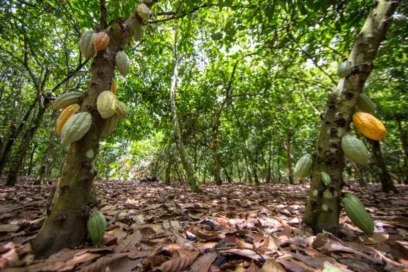
Agroforestry: This practice involves integrating cocoa cultivation with other trees, such as shade-providing plants, fruit trees, and timber species, thereby mimicking natural forest ecosystems. The benefits are extensive: it improves soil health through natural compost from fallen leaves, enhances biodiversity by supporting diverse plant and animal life (reducing vulnerability to pests), and regulates the microclimate by buffering against extreme temperatures and reducing water evaporation. Agroforestry also sequesters carbon, contributing to climate change mitigation. For farmers, it offers opportunities for income diversification and improved food security. Studies show that manual pollination within agroforestry systems can significantly boost cocoa yields, potentially tripling farm yields and doubling farmers’ annual profits in major producer countries. In Ghana, initiatives like the “Ghana Cocoa Forest REDD+ Programme” are incentivizing farmers to transition to agroforestry systems.
Improved Cocoa Varieties: Developing and planting cocoa varieties that are more resistant to heat, drought, and prevalent diseases is another vital strategy. Research efforts, such as those by Mars, which has mapped the cocoa genome, are leading to the development of new varieties that are three to four times more productive and inherently more climate-resistant.
Sustainable Farming Techniques: Beyond agroforestry and new varieties, a suite of sustainable farming techniques can strengthen farms against environmental pressures while increasing productivity:
- Water Management: Methods such as mulching and drip irrigation are critical for reducing water usage and maintaining healthy cocoa growth, especially in regions facing erratic rainfall.
- Soil Health: Practices like cover cropping protect the soil from erosion and help retain moisture. The use of organic fertilizers, such as compost and manure, improves soil fertility and can counteract issues like salty and acidic soils often resulting from the overuse of inorganic fertilizers.
- Pest and Disease Control: Good management practices, including regular pruning and effective control of diseases like black pod, are essential for maintaining healthy cocoa trees. Ghana’s COCOBOD promotes a “4Ps” module (Pruning, Pollination, Poultry Manure, and Protection) to help normalize cocoa production at one million metric tons annually.
B. Strengthening Governance and Policy: National Efforts and Regulatory Frameworks
National governments play a pivotal role in creating an enabling environment for sustainable cocoa production. Both Côte d’Ivoire and Ghana have integrated “climate-smart cocoa systems” into their national strategies to address climate change.
In Ghana, COCOBOD is actively working to normalize the annual production of one million metric tons of cocoa. Efforts are also underway to negotiate higher farm gate prices, aiming to stabilize farmer incomes and reduce the incentive for smuggling cocoa to neighboring countries. Furthermore, Ghana received $4.8 million from the World Bank’s Forest Carbon Partnership Facility (FCPF) for reducing nearly one million tons of carbon emissions, with a potential for up to $45 million by the end of 2024, recognizing its sustainable cocoa farming practices.
Nigeria is considering the establishment of a National Cocoa Management Board (NCMB), a policy shift aimed at streamlining the fragmented governance of its cocoa sector and reversing production decline. This initiative emphasizes a focus on value chain management that extends beyond mere production and export. In Côte d’Ivoire, officials are working to limit contracts to manage risks associated with sustainable production concerns.
C. Collaborative Initiatives and International Support: A Global Response
Addressing the complex challenges in the cocoa sector necessitates broad collaboration among diverse stakeholders, including governments, chocolate companies, and international organizations.
The Cocoa & Forests Initiative (CFI) is a prominent multi-stakeholder platform launched in 2017. It brings together the governments of Côte d’Ivoire and Ghana with 36 leading cocoa and chocolate companies, collectively representing 85% of global cocoa usage. The CFI’s core goals are to end deforestation and forest degradation, restore forest areas, promote sustainable cocoa production, and improve farmer livelihoods. It fosters decision-making through a robust governance structure that aligns with national policies, such as REDD+ programs. The initiative is driven jointly by the World Cocoa Foundation (WCF) and IDH, The Sustainable Trade Initiative.
The World Cocoa Foundation (WCF) is an international membership organization that represents the global cocoa and chocolate sector across six continents. Its vision is to be a catalyst for a thriving and equitable cocoa sector that collaborates to improve farmer income, reverse deforestation, and combat child labor. The WCF supports research, promotes sustainable agricultural practices, and engages communities, contributing valuable insights into ecological dynamics and enhancing crop resilience. It facilitates collaboration among its members and co-creates programs like CocoaAction and the CFI.
IDH, The Sustainable Trade Initiative, plays a crucial role in facilitating the CFI and driving sustainability efforts, particularly through initiatives focused on ensuring a living income for farmers. IDH convenes public-private commitments, promotes sustainable procurement practices, accelerates investments in sustainable cocoa sourcing, and emphasizes traceability and data transparency. Their programs include Cocoaperation, which aims to reduce the living income gap for 100,000 farming households in Côte d’Ivoire by 2025; DISCO, which supports farming families, eliminates deforestation, and combats child labor for Dutch markets; and Beyond Chocolate, which seeks to enable cocoa growers supplying the Belgian market to earn a living income and eliminate deforestation.
A significant external regulatory development is the EU Deforestation Regulation (EUDR), which is set to become effective on December 30, 2025. This regulation mandates that all cocoa imported into the European Union must be deforestation-free and fully traceable from the farm to the final product. Specifically, it requires proof that cocoa was not produced on land deforested after December 31, 2020, along with full traceability (requiring a “digital footprint” and GPS coordinates for every farm plot) and comprehensive due diligence to assess and mitigate risks. While the EUDR is a powerful tool for driving sustainability, it presents significant challenges for West African smallholder farmers, who constitute 90% of cocoa producers in the region. Many lack access to GPS tools, digital literacy, and formal land documentation, making compliance difficult. Without adequate support and investment in infrastructure and training, non-compliance could lead to shipment rejections, financial losses, and a loss of credibility in the global market, potentially marginalizing already vulnerable farmers. This regulation therefore highlights the urgent need for a “just transition” that supports producers in meeting new standards rather than penalizing them.
The following table provides an overview of major initiatives and strategies for sustainable cocoa in West Africa, highlighting the collaborative efforts underway.
Table 3: Major Initiatives and Strategies for Sustainable Cocoa in West Africa
| Initiative/Strategy Name | Key Stakeholders Involved | Primary Goals/Focus Areas | Examples of Impact/Implementation |
| Agroforestry Practices | Farmers, Governments, NGOs, Companies (e.g., Mars, Cocoa Life) | Climate adaptation & mitigation, Soil health, Biodiversity, Income diversification, Reduced deforestation pressure | Triple yields, double profits (manual pollination in agroforestry) ; Ghana Cocoa Forest REDD+ Programme ; Mars promoting agroforestry models |
| Improved Cocoa Varieties | Research institutions, Companies (e.g., Mars), Farmers | Climate resilience (heat/drought/disease resistance), Increased productivity | Mars genome mapping leading to 3-4x more productive, climate-resistant varieties |
| Sustainable Farming Techniques | Farmers, NGOs, Companies (e.g., Cocoa Life, COCOBOD) | Water management (mulching, drip irrigation), Soil health (cover cropping, organic fertilizers), Pest/Disease control (pruning, black pod control) | Cocoa Life training programs ; Ghana’s COCOBOD “4Ps” (Pruning, Pollination, Poultry Manure, Protection) |
| National Governance & Policy | Governments (Côte d’Ivoire, Ghana, Nigeria) | Climate-smart cocoa systems, Farmer income stabilization, Sector streamlining, Curbing unsustainable production | Ghana’s COCOBOD aims for 1M tons production, higher farm gate prices ; Nigeria’s proposed National Cocoa Management Board |
| Cocoa & Forests Initiative (CFI) | Govts. of CI & Ghana, 36+ Cocoa/Chocolate Cos., WCF, IDH, CSOs | End deforestation, Restore forests, Sustainable production, Improve farmer livelihoods | Aligns with national REDD+ programs ; Driven by WCF & IDH |
| World Cocoa Foundation (WCF) | Global cocoa/chocolate sector members, Govts., CSOs | Catalyst for equitable cocoa sector; Improve farmer income, Reverse deforestation, Combat child labor | Facilitates CFI, supports member sustainability programs, co-creates collaborative programs (e.g., CocoaAction) |
| IDH, The Sustainable Trade Initiative | Businesses, Governments, Supply Chain Partners | Drive sustainability through living income, Eliminate deforestation, End child labor, Traceability | Cocoaperation (CI), DISCO (Dutch markets), Beyond Chocolate (Belgian market) ; Facilitates CFI |
| EU Deforestation Regulation (EUDR) | EU, Importing companies, Producer countries/farmers | Ensure deforestation-free, traceable cocoa imports to EU | Mandates farm-to-product traceability, no deforestation after 2020 cut-off |
| Living Income Differential (LID) | Ghana, Côte d’Ivoire, Cocoa/Chocolate Companies | Ensure fair farmer income, Improve living standards | $400/ton premium on cocoa from Ghana/CI ; Companies urged to pay full LID |
| Carbon Credits | Ghana, World Bank (FCPF) | Climate mitigation, Income diversification for farmers | Ghana received $4.8M for reducing 1M tons carbon emissions ; Potential for $45M by end 2024 |
| Value Addition/Industrialization | West African Govts., Local industries | Economic diversification, Job creation, Capture more value from cocoa | Key pillar of Côte d’Ivoire’s NDP ; Processing into butter, powder, chocolate |
D. Economic Incentives: Fair Prices, Carbon Credits, and Value Addition
Economic incentives are paramount to fostering sustainable practices and building resilience.
Living Income Differential (LID): Introduced in 2019, the LID is a premium of $400 per ton on cocoa sold by Ghana and Côte d’Ivoire. Its primary aim is to ensure that cocoa farmers receive a fair income, thereby improving their living standards and incentivizing sustainable farming practices. Companies are urged to pay the full LID and go beyond government-mandated price floors to ensure farmers receive an actual living income, suggested by farmers to be triple the current rate.
Carbon Credits: Sustainable cocoa farming practices that actively curb deforestation can generate carbon credits. Ghana, for example, received $4.8 million from the World Bank’s Forest Carbon Partnership Facility (FCPF) for reducing nearly one million tons of carbon emissions, with the potential to receive up to $45 million by the end of 2024. This mechanism offers a valuable opportunity for income diversification for farmers, linking environmental stewardship directly to economic benefit.
Value Addition and Industrialization: A crucial economic opportunity lies in West African nations moving beyond the export of raw cocoa beans. Currently, Côte d’Ivoire exports approximately 70% of its production as raw beans, with only 2.4% constituting finished chocolate products. This imbalance means that the country captures only a fraction of the cocoa value chain, with the majority of wealth and opportunities accruing to chocolate makers in Europe. Processing cocoa domestically into products like butter, powder, liquor, and finished chocolate can unlock significant value, spur the growth of ancillary industries such as packaging, logistics, and marketing, and create additional employment opportunities, particularly for youth and women. This industrialization is a key pillar of Côte d’Ivoire’s National Development Plan. Ghana has also made notable progress in improving its local processing capacity, demonstrating the feasibility and benefits of this approach. Leveraging the African Continental Free Trade Area (AfCFTA) can further expand markets and improve the trade balance for these nations.
V. The Road Ahead: Challenges and Opportunities for a Sustainable Cocoa Sector
The journey towards a truly sustainable and resilient cocoa sector in West Africa is fraught with challenges, yet also presents significant opportunities for transformative change. A critical bottleneck lies in the gap between high-level commitments and effective, widespread implementation, particularly at the smallholder farmer level. The challenge is not merely identifying what needs to be done, but understanding how to scale and implement existing solutions effectively and equitably. This requires bridging the divide between grand pronouncements and practical, localized support for the millions of farmers who form the backbone of the industry.
A. Overcoming Implementation Hurdles: Bridging Gaps in Capacity, Funding, and Data
Despite the numerous initiatives and policy frameworks, significant implementation hurdles persist.
Farmer Capacity: Smallholder farmers often possess limited technical and economic capacity to enact the necessary reforms for sustainable practices. There is a pressing need to scale up access to climate services and information, especially for illiterate farmers, potentially through the development of “zero literacy devices” for information dissemination.
Financial Investment: Farmers frequently struggle to afford necessary agricultural inputs, such as improved seedlings, fertilizers, and irrigation systems. Sustainable finance mechanisms, including microloans and subsidies, are crucial to help local producers restore or replant their farms and adopt climate-resilient inputs.
Traceability and Data: A major challenge, particularly in the context of the EU Deforestation Regulation (EUDR), is achieving full traceability. Most smallholder farms (90% in West Africa) lack GPS mapping and digital traceability systems, relying instead on manual record-keeping, if any. Furthermore, only about 40% of Ivorian cocoa is directly sourced, making it difficult to accurately quantify its deforestation exposure. Farmers also often lack proper land documentation to prove their cocoa originates from legal, non-deforested land.
Governance and Infrastructure: Poor infrastructure, particularly deteriorating roads, hinders the efficient transport of cocoa produce to markets and exposes farmers to security risks from bandits. The cocoa industry also faces challenges from inconsistent production patterns, disease incidence, pest attacks, and a general lack of agricultural mechanization. Government neglect and funding shortages have been cited as contributing factors to these infrastructure deficiencies.
Trade-offs: While beneficial, certain climate-smart practices like agroforestry can involve complex trade-offs between productivity and achieving desired sustainability goals. Balancing these competing objectives requires careful planning and support.
B. The Imperative of Value Addition in West Africa: Moving Beyond Raw Beans
A significant opportunity for enhancing resilience and economic empowerment lies in West Africa’s ability to capture more value from its cocoa production. Currently, Côte d’Ivoire, the world’s largest producer, exports a staggering 70% of its cocoa as raw beans, with only 2.4% being processed into finished chocolate products. This imbalance means that the country gains minimal benefit from its most important commodity, while significant wealth and opportunities are exported to chocolate manufacturers in Europe.
Processing cocoa domestically into products such as butter, powder, liquor, and finished chocolate can unlock substantial economic benefits. This industrialization can spur the growth of ancillary industries like packaging, logistics, and marketing, thereby diversifying the economy and creating additional employment opportunities, particularly for the youth and women. This strategic shift towards industrialization is a key pillar of Côte d’Ivoire’s National Development Plan. Ghana has also made commendable strides in improving its local processing capacity, demonstrating the viability of this approach.
This move towards value addition is not merely an economic development strategy; it is a critical component of climate resilience. By capturing a larger share of the global market’s $100 billion value, producer nations can generate more internal revenue. This increased revenue can then be strategically reinvested into climate adaptation strategies, farmer support programs, and crucial infrastructure development, providing a vital buffer against climate-induced production shocks and reducing reliance on volatile raw bean prices. It fundamentally shifts the power dynamic in the global cocoa trade, allowing West African nations greater control over their economic destiny and the resources needed for a truly sustainable transformation. Leveraging the African Continental Free Trade Area (AfCFTA) can further expand markets for processed cocoa products and improve trade balances across the region.
C. A Shared Responsibility: The Role of Consumers, Companies, and Governments
Achieving a sustainable and just cocoa sector requires a concerted effort and shared responsibility from all stakeholders.
Companies: Chocolate and cocoa companies have a crucial role to play. They must ensure that farmers are paid a living income, going beyond government-mandated price floors to ensure that the full Living Income Differential (LID) reaches farmers. Many companies have already made publicly disclosed zero-deforestation commitments (ZDCs) and are investing in sustainable sourcing, agroforestry, and traceability initiatives. However, the slight decrease in the proportion of exports handled by traders with ZDCs by 2022 indicates that sustained effort and accountability are necessary to translate commitments into widespread impact.
Governments: Producer country governments are essential for establishing robust policy frameworks, addressing the root causes of forest encroachment, improving vital infrastructure, and ensuring security in cocoa-growing regions. They also need to provide comprehensive climate services and support mechanisms tailored to the needs of smallholder farmers.
Consumers: Consumers wield significant power through their purchasing choices. By demanding sustainable and fair-trade chocolate products, they can drive market demand for ethically and environmentally responsible cocoa. Awareness-raising campaigns are important to inform consumers about the impacts of their choices.
Collective Action: The complexity of the challenges necessitates public-private cooperation and collective transformation, which are far more efficient than fragmented efforts. Initiatives like the Cocoa & Forests Initiative (CFI) serve as prime examples of how governments, companies, and civil society organizations can collaborate to address systemic issues and achieve greater impact at scale.
Conclusion: Securing the Future of Chocolate and West African Livelihoods: A Call to Collective Action
West Africa’s cocoa belt is the indispensable engine of the global chocolate industry, supporting the livelihoods of millions of smallholder farmers and forming a critical pillar of national economies. However, this vital sector stands at a precipice, facing an existential threat from the escalating impacts of climate change. Rising temperatures, increasingly erratic rainfall patterns, and the proliferation of pests and diseases are directly undermining cocoa yields and quality. This environmental crisis is inextricably linked to a profound socio-economic one, exacerbating farmer poverty, perpetuating child labor, and driving a destructive feedback loop with deforestation. The world’s reliance on a region grappling with such deep-seated vulnerabilities underscores that the stability of the global chocolate supply is inherently tied to the well-being and resilience of West African cocoa farming communities.
Despite the daunting challenges, promising pathways to resilience are emerging. Climate-smart agricultural practices, notably agroforestry, offer multi-faceted benefits, simultaneously enhancing climate adaptation, contributing to mitigation through carbon sequestration, and diversifying farmer incomes. The development of climate-resilient cocoa varieties and the adoption of sustainable farming techniques like improved water and soil management are also critical. Furthermore, national governments are strengthening governance and policy frameworks, while collaborative international initiatives such as the Cocoa & Forests Initiative (CFI) and the World Cocoa Foundation (WCF) are fostering unprecedented cooperation among companies, governments, and civil society to address deforestation, improve livelihoods, and promote sustainable production. The EU Deforestation Regulation (EUDR), while posing significant compliance challenges for smallholders, represents a powerful external impetus for traceability and deforestation-free supply chains.
A key strategic imperative for West African nations is the accelerated shift towards value addition. By processing more cocoa domestically into finished products, these countries can capture a greater share of the global chocolate market’s immense value. This economic empowerment is not merely a development goal but a crucial strategy for building climate resilience, generating internal resources that can be reinvested in sustainable practices, farmer support, and vital infrastructure, thereby reducing vulnerability to external market fluctuations.
Ultimately, securing the future of chocolate and the livelihoods of millions in West Africa demands sustained, coordinated, and equitable collective action. This requires chocolate companies to uphold commitments to fair prices and zero-deforestation, governments to invest in robust policies and infrastructure, and international organizations to provide targeted support and facilitate knowledge transfer. Consumers, through their purchasing choices, also hold the power to drive demand for ethically and sustainably produced cocoa. The intricate interdependencies between environmental health, economic stability, and social well-being in the cocoa sector necessitate a holistic approach. The future of a beloved global treat, and the prosperity of an entire region, hinges on a shared commitment to building a truly sustainable and just cocoa future.
Leave a Reply